
September 28, 2026
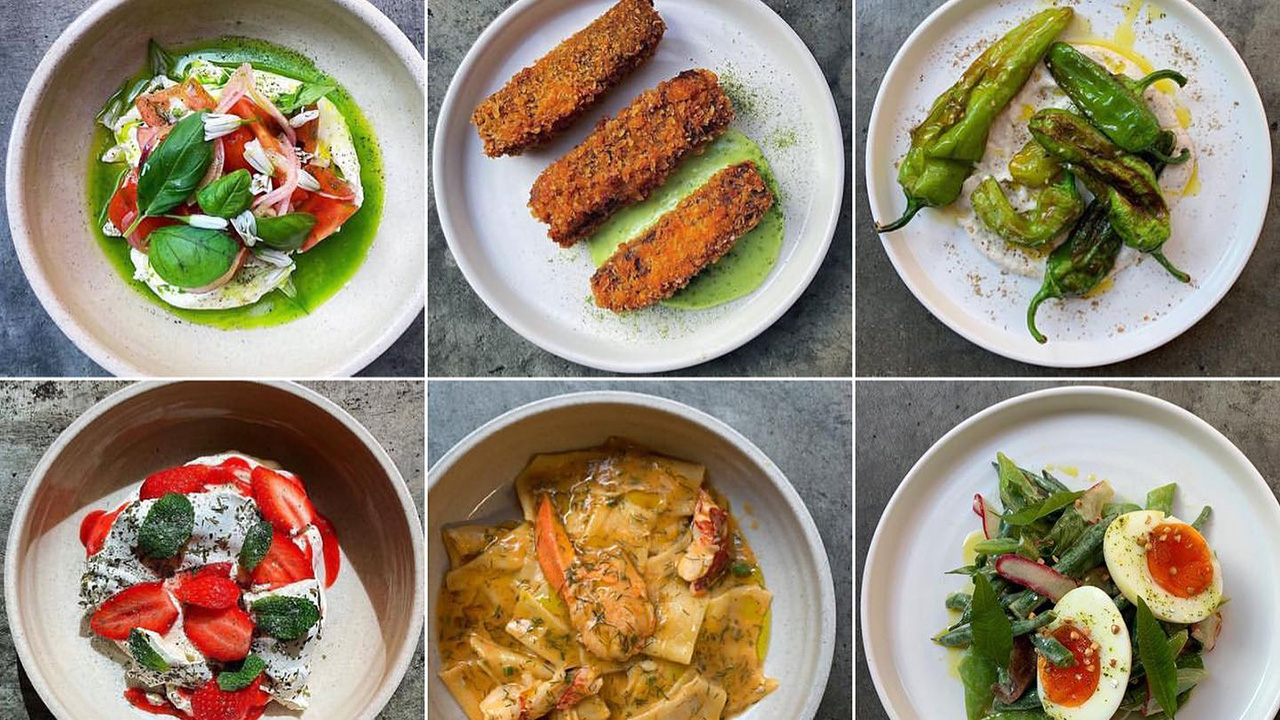
Anyone searching for a sustainable restaurant in London will see the word everywhere. What it means inside a working kitchen is harder to spot. The answer lives in small daily decisions about who grows the food and what happens to the parts that never reach the plate.
The day starts early on White's Row E1. Deliveries arrive at the glass pavilion under five minutes from Liverpool Street station and the open kitchen gets to work.
A menu that follows the seasons asks less of the supply chain. When a vegetable finishes for the year we take it off and cook what has arrived instead.
Sustainable food in London depends on the people who grow and catch it. We work with a small group of independent suppliers across bread, seafood, fruit, vegetables and olive oil. Most are small businesses that farm or fish with care for the land and the water.
We speak to them often and know what each one does best. A call from a grower about a short run of something good can change the day's plates. The menu follows what arrives at the door each morning.
Buying this way keeps smaller producers working and keeps our food close to its source.
A zero-waste kitchen is a goal few restaurants reach in full. We work towards it in practical ways:
Our team finds that most waste is decided at the ordering stage. Any sustainable restaurant in London can make its biggest gains there.
Our Spitalfields cocktail list is written alongside the kitchen. Both teams talk each day about what could go to waste and how a drink might use it.
This is the part of running a sustainable restaurant in London that guests taste most directly.
Natural wine is made with as little intervention as possible. That usually means organic or biodynamic grapes fermented with wild yeasts. Biodynamic farming treats the vineyard as a self-sustaining system with its own planting calendar.
Our Spitalfields list focuses on small producers and rare grape varieties. At Bar Crispin on 19 Kingly Street in Soho, the list leans towards the Loire and the Jura as well as volcanic wines from Sicily. Oxford Circus station is a short walk away.
For anyone choosing a sustainable restaurant in London by what is in the glass, the wine list is a good place to start.
Our Clapham restaurant sits inside the Studio Voltaire gallery at 1A Nelsons Row SW4. It is a few minutes' walk from Clapham Common station.
Alongside the bottle list we pour a range of sustainable tap wines. Tap wine arrives in reusable steel kegs and is served like draught beer. There is no bottle to make or ship or recycle. The wine stays fresh once opened so less is poured away. It is one of the simplest changes a sustainable restaurant in London can make.
We would rather show the work openly and keep improving it.
The same principles shape our Crispin Catering menus for weddings and corporate events across the UK. For an eco-friendly restaurant in east London with this thinking on every plate, book a table for east London dining in the glass pavilion. Or come to Clapham for a long lunch in the gallery.


